iPhone, iPad and Apple Watch · UK grassroots football

Everyone gets their minutes.

Roll On plans your line-up and every substitution before you reach the touchline, then counts who is owed time on the pitch.

Minutes this match

Fair share 41 min

The dashed line is what everyone is owed today. The short bar is who starts the next one.

Planning · 01

Every change decided before the whistle.

Set the shape and the starting eleven at the kitchen table. Roll On cuts the match into rotation windows and pencils in who comes off in each one — one strip across the whole match, each half named beneath it.

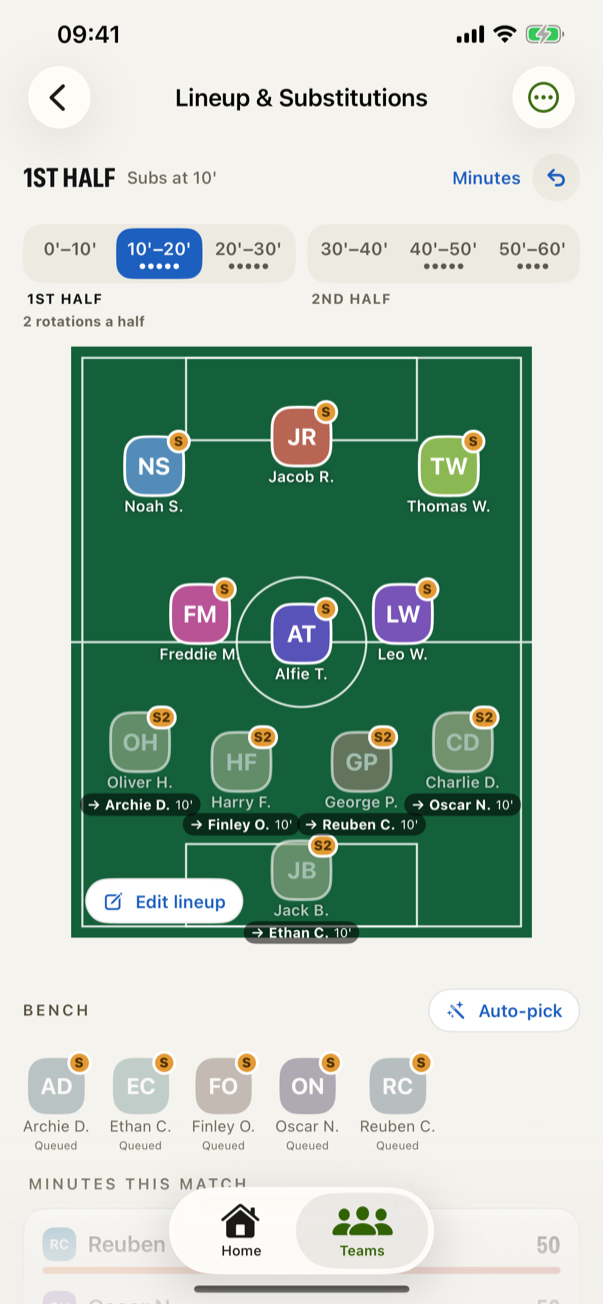
  • Every shirt says when it comes off. The player going off is greyed, with the substitute's lozenge beside them.
  • Open a window and it shows its working — who goes off, who comes on, and the minute it happens.
  • Change the half length and the plan follows. Every substitution keeps its own half instead of stranding itself at a minute the match no longer reaches.
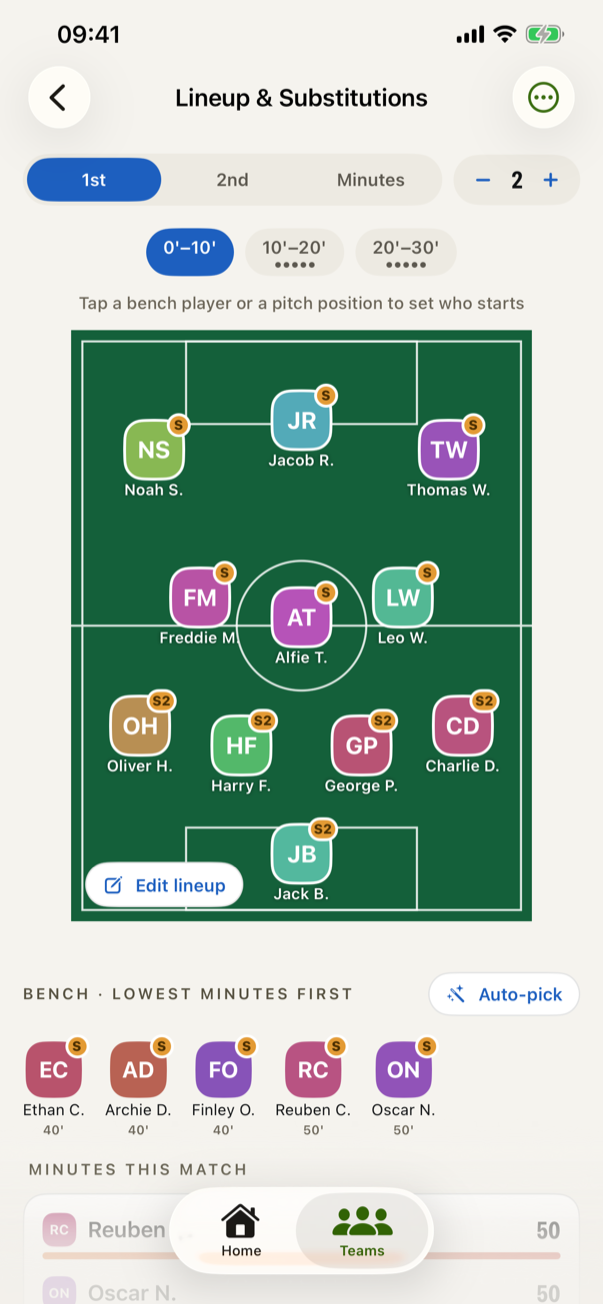
The starting eleven on the pitch, each shirt marked with the window they come off in, above a strip of the whole match's rotation windows.
The pitch, the whole match's windows and the bench.
The same pitch with a later window selected: the players coming off are dimmed, each tagged with who replaces them and at what minute.
A window later.

Playing time · 02

Fair share as a number, not a feeling.

A dashed line across the chart is what every child is owed today. The bars under it are the ones to get on next — which is the whole conversation you are trying not to have in the car park.

  • Minutes, goals and assists add up all season, so the register answers who has played more and who has played less.
  • A tournament shares the whole morning, not each twelve-minute game on its own — so nobody sits out two running.
  • A match and a development game count as one Sunday, so whoever the first game left short goes on first in the second.
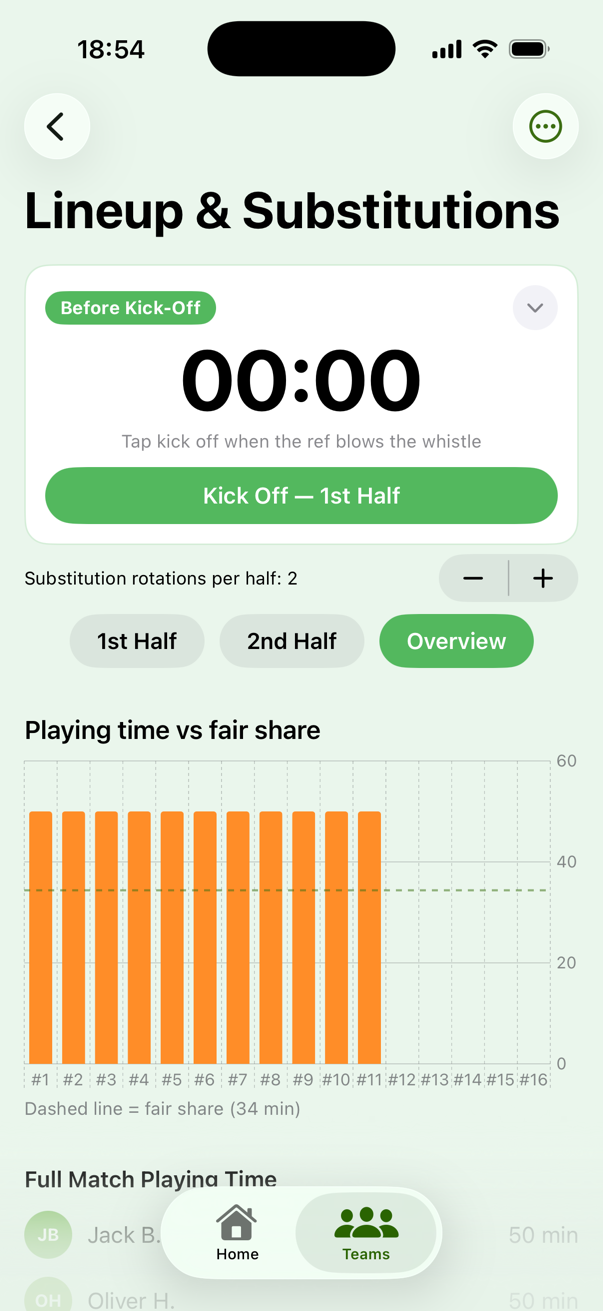
A bar chart of each player's minutes for the match, against a dashed fair-share line.
Everyone measured against their fair share.
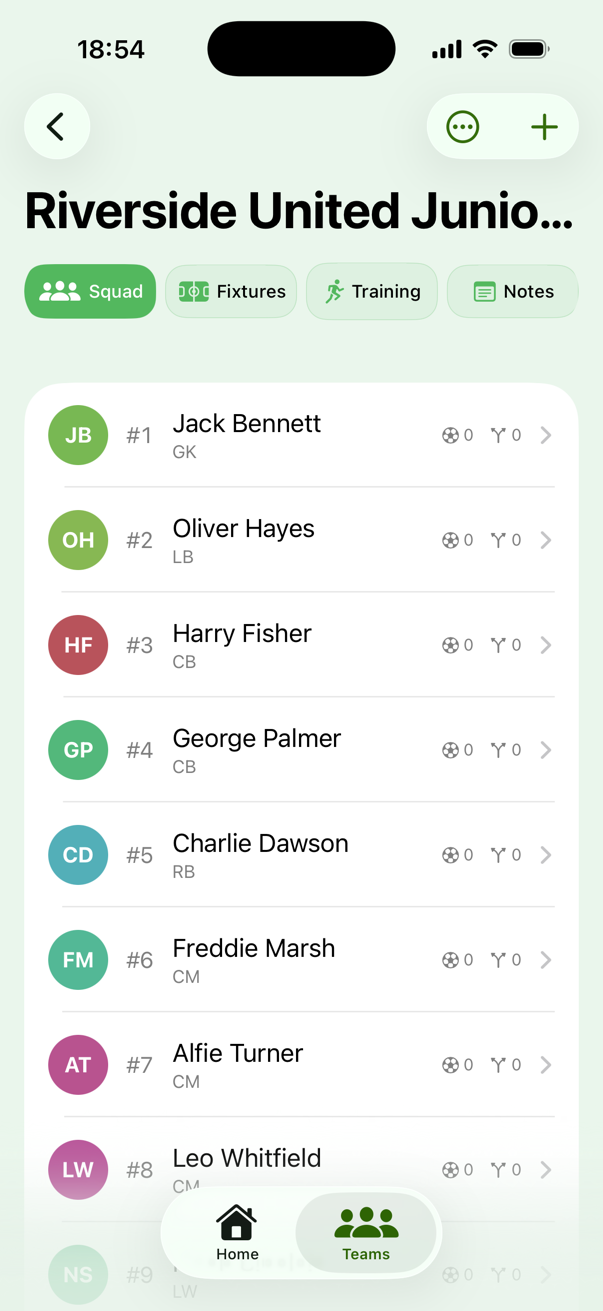
The squad list ordered by games played, each player's games, goals and assists under their name.
The season register.

On the touchline · New

Cold hands, phone in your pocket.

Once the whistle goes, the plan has to reach you without a glove coming off.

New
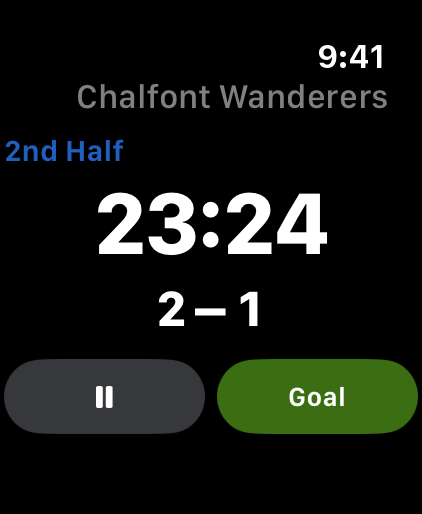
The Roll On watch app: the opponent's name, the second-half clock at 23:24, the score 2-1, and Pause and Goal buttons.

Apple Watch

The clock, the score and a Goal button on your wrist. Kick off, pause, end the half, log a goal and who set it up — the phone keeps up, and the season keeps the goal.

Now with the score

Lock Screen & Dynamic Island

The clock runs without unlocking the phone — and now carries the score with it, in the Island and on the Lock Screen both.

New

Back to the match, one tap

While the clock runs, a bar sits above the tab bar wherever you are in the app: the time, the score, and when the next subs are due.

And the goal itself is one button, for either side: name the scorer and whoever set it up, and the score follows on the phone, the watch, the Island and the Lock Screen at once.

New · Ask Siri

“Who's played the least in Roll On?”

Ten questions Siri answers out loud, from the same figures the squad register shows — so the answer in the car park agrees with the app. Say them or type them; pull down on the Home Screen and a few words will do.

Every answer is worked out on your phone. Nothing about your squad is sent anywhere to answer a question.

  • “Who's top scorer…”
  • “Who's played the most games…”
  • “How many minutes has Alfie played…”
  • “When's my next match…”
  • “How did we get on…”
  • “What are my next fixtures…”

“Who needs minutes in Roll On?”

Harvey L. has the fewest minutes for Riverside United U11 — 96, across four games.

Fewest minutes Riverside United U11
HLHarvey L.96′
ATAlfie T.124′
FMFreddie M.131′

Ask without naming a team and Siri picks the side that played most recently — and says which one it answered about. Name one to be sure: “…for Under 10s in Roll On.”

The rest of the season

Six more things you stop doing by hand.

Tournament days

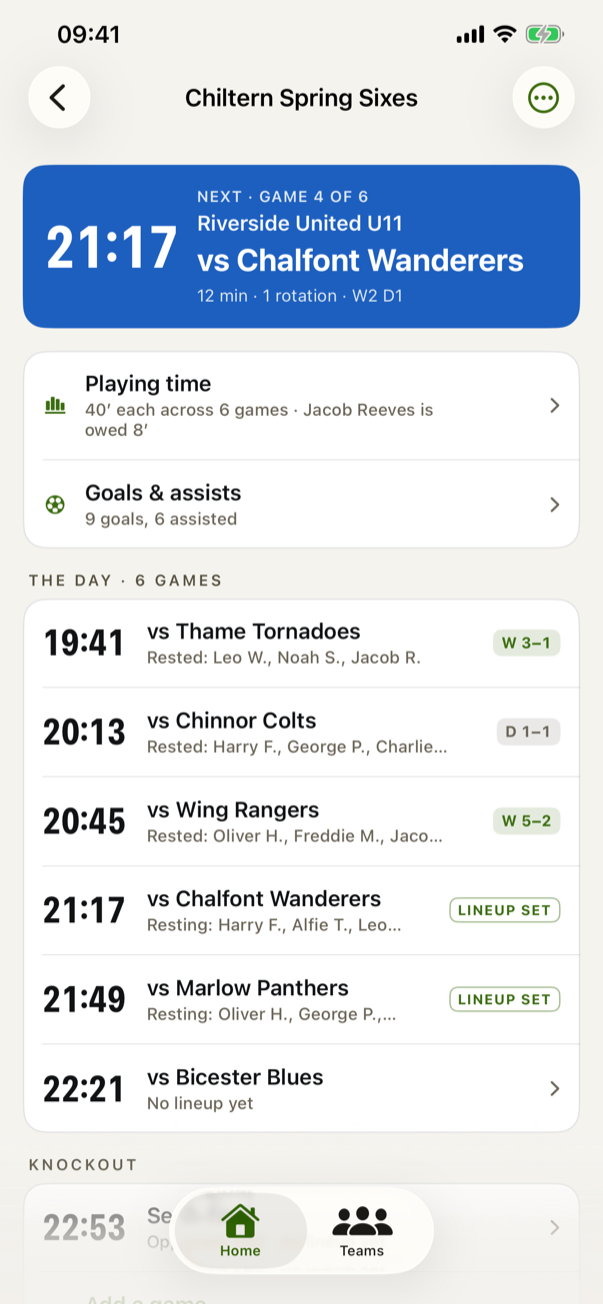
Six games in a morning as one screen. Knockouts sit outside the share — and a tie that finishes level goes to penalties, with the day counting the result.

Goals and assists as they go in

One button on the touchline, for either side. Name the scorer and who set it up; the score follows and the season keeps it.

Your league table, in the app New

Paste the embed code from FA Full-Time — or a Junior Premier League fixtures link — and the standings sit on the team's screen. One field; Roll On works out which league it is.

Two games in one morning

The match, then a shorter development game. Two scores, one morning's playing time — so the second game evens up the first.

Share a team with your co-coach

Send an invite code and you both see the same squad and the same running clock — either of you can take the clock over.

Everyone on the same team sheet

Fixtures, training and notes in one calendar. Share the finished team sheet as a printable image, or the squad as a spreadsheet.

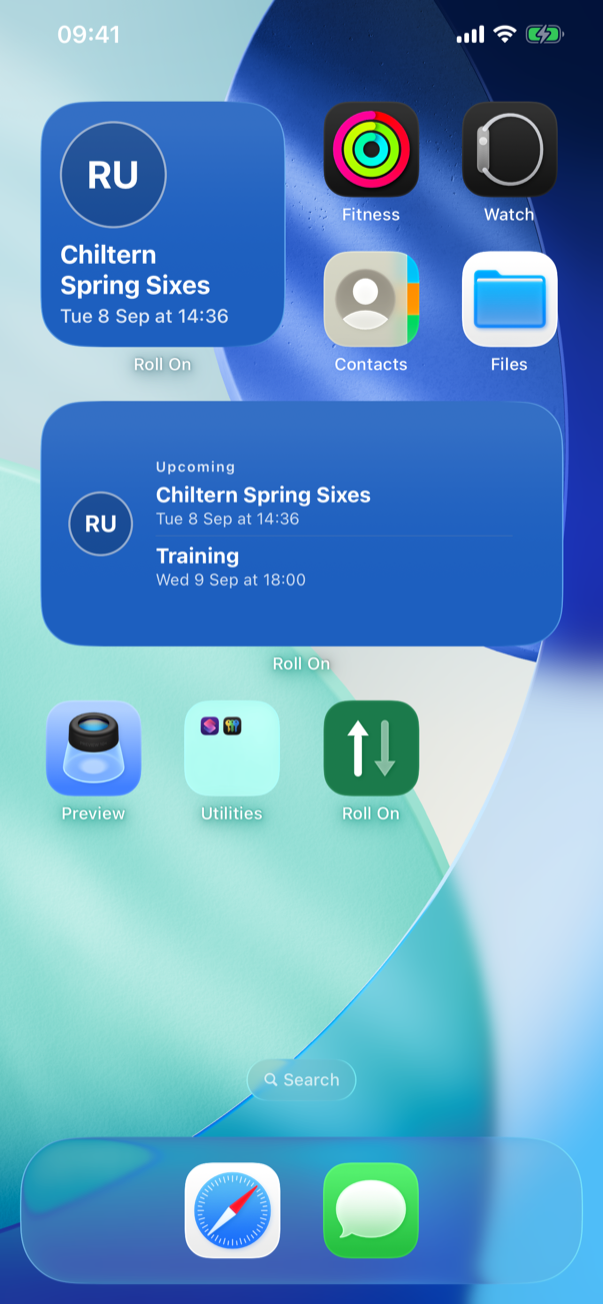
An iPhone Home Screen with two Roll On widgets: a small one showing the next fixture with its date, and a wider one listing the next two events with the team's badge.

Home Screen

Sunday's kick-off, without opening anything.

Two sizes, in your team's own colours. It drops yesterday's game at midnight on its own, and taps straight through to the match.

A tournament's day screen: the next kick-off, the day's fair-share figure, and six games in running order with the ones already played showing their scores.

Tournament day

Six games in a morning, shared as one day.

Every game in running order, with the day's minutes pooled — so fair share means fair across the morning, not fair in each twelve-minute game.

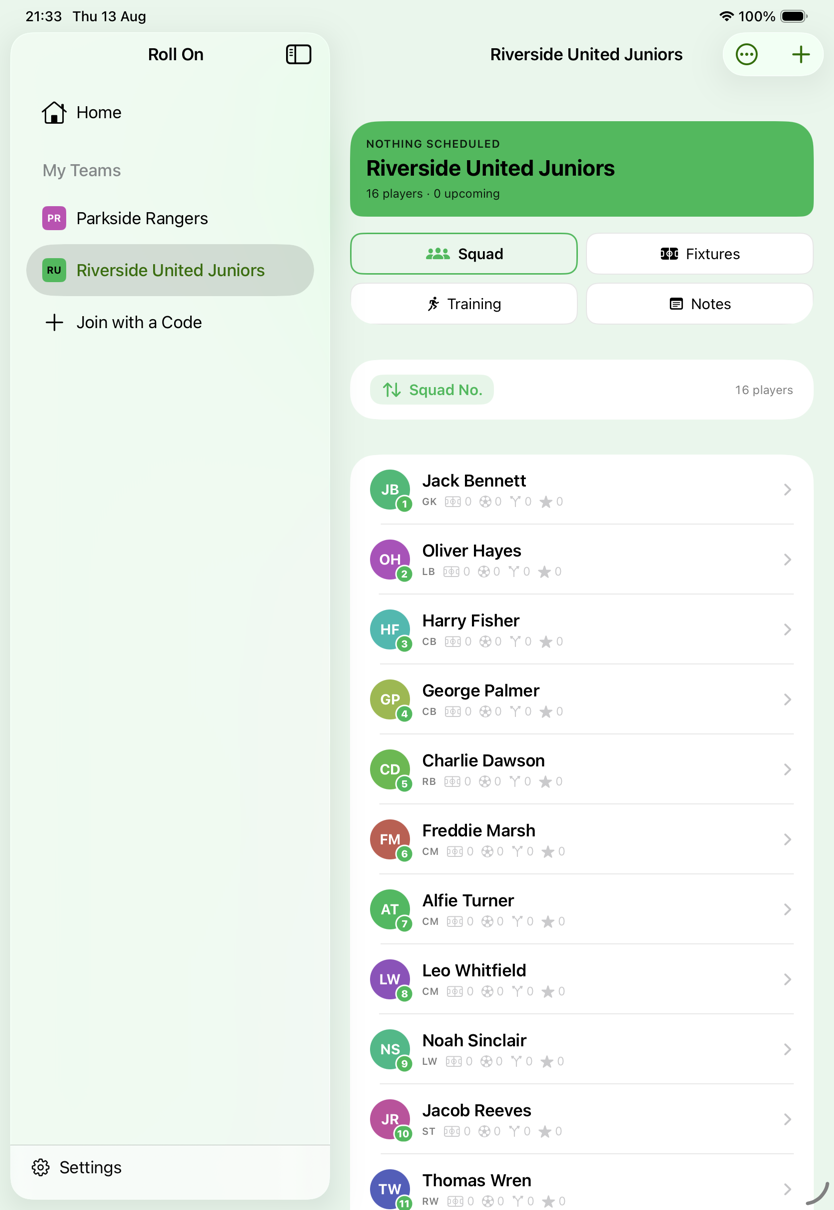
Roll On on an iPad: a sidebar listing both teams, with the squad register open beside it.

On iPad

The same teams, with room to breathe.

One download covers both. Your teams sit in a sidebar, the pitch takes the window with the subs alongside, and a plan made on the iPad is on your phone at kick-off.

Your data

There is no Roll On server. Your squad lives in your iCloud.

  • Players and fixtures are stored in your own private iCloud database, synced by Apple across your devices and shared only with coaches you invite. The developer can't read any of it. Roll On never asks for a photo of a player.
  • No adverts, no analytics, no tracking SDKs. The app measures nothing about how you use it and sends nothing to the developer — Siri's answers included, which are worked out on the phone.
  • Delete a player, a squad, or a whole team from inside the app and it goes from iCloud too, on the next sync.
  • Invite codes are the one exception. Inviting a coach briefly publishes a code, and asking to join publishes your iCloud address, to a shared lookup area so the other coach's device can find it. No player ever appears there. The policy spells this out.